

Life is engineerable
University of Toronto's iGEM team
We apply synthetic biology to tackle pressing problems, and train the next generation of scientists to engineer these futures.
01The team
What we do
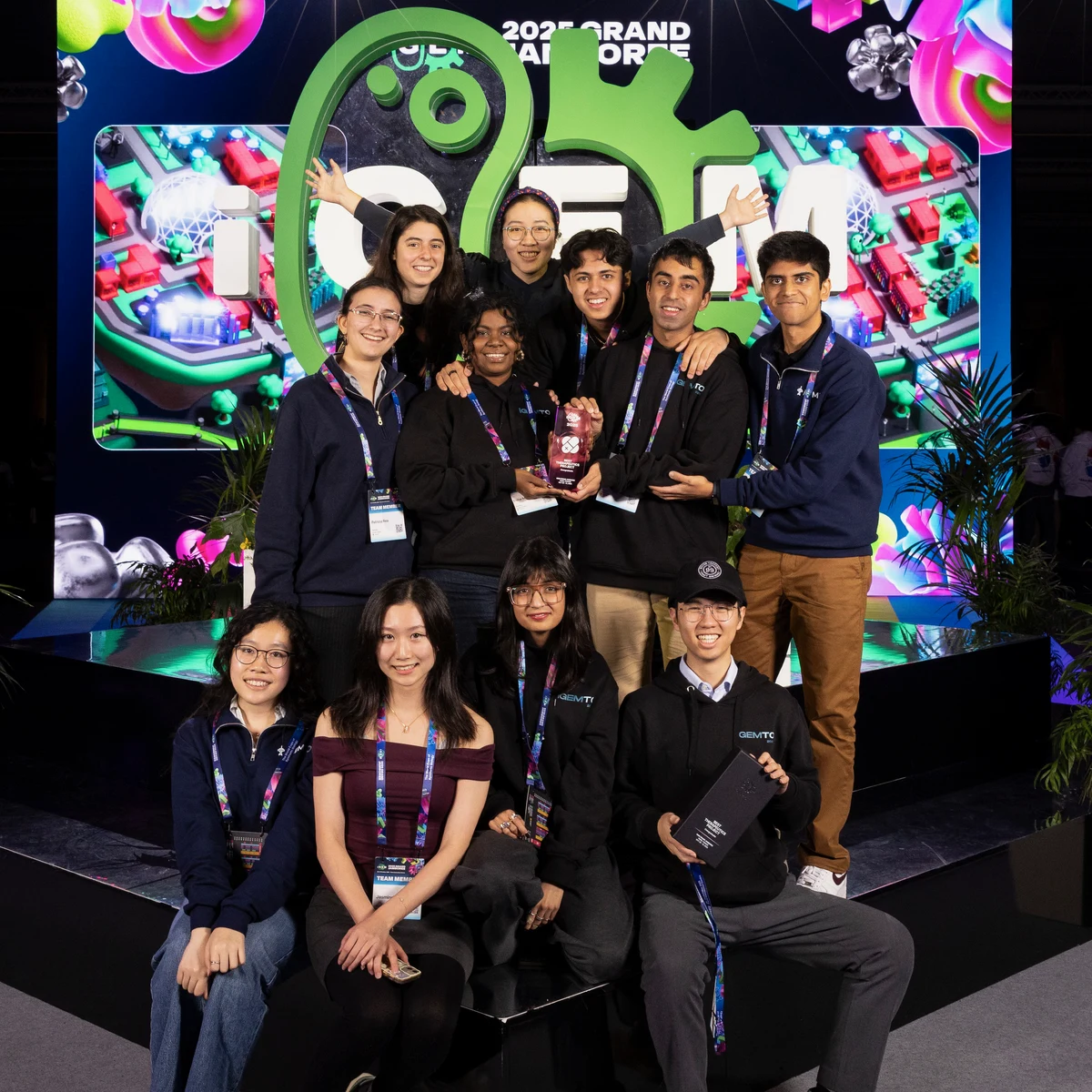
Synthetic biology treats a living cell as something you can engineer. Give the cell new genetic instructions, and it can do a job it never evolved to do. Every winter, our team selects a global problem and spends the year trying to solve it — designing genetic constructs, modeling the outcomes, and testing the results. In November, we present our work at the iGEM Grand Jamboree, competing with teams from all around the world.
The research is real...
Past teams have tackled antibiotic resistance, landfill emissions, invasive tree diseases, contaminated mine tailings, and industrial plastic waste. Our work produces tangible results, with members having gone on to publish their research or spin out their projects into startups.
so is the training
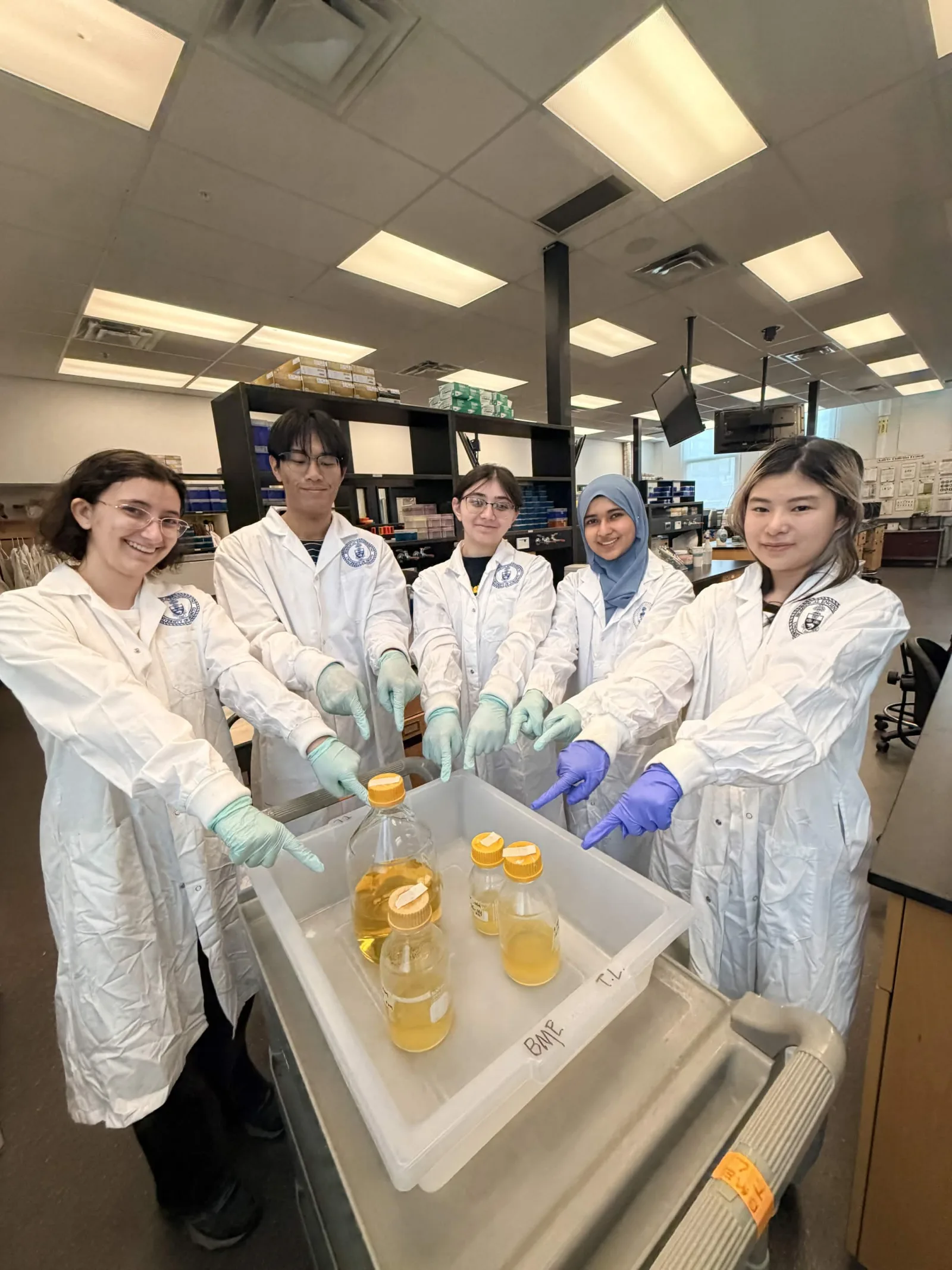
Most members arrive with little to no research experience, but leave as confident scientists who have completed the full cycle of designing, building, and testing. Whether they move into computational modeling or wet lab research, the skills they build here form the foundation of their careers.
In practice
Bench work, teaching, outreach, the Jamboree
Two decades of it, recovered from the team's own archive and browsable by year or category.
02Track record
Every team since 2005
A different problem every year, including the years the record is incomplete. Select a year for the short version, then open it for the project, the awards and the photographs that survive.
PetaBite — PETase discovery from the Logan petabase index
Mining the Logan petabase index — a search across the entire public sequencing archive — for new plastic-degrading PETase enzymes.
Photographs
All 77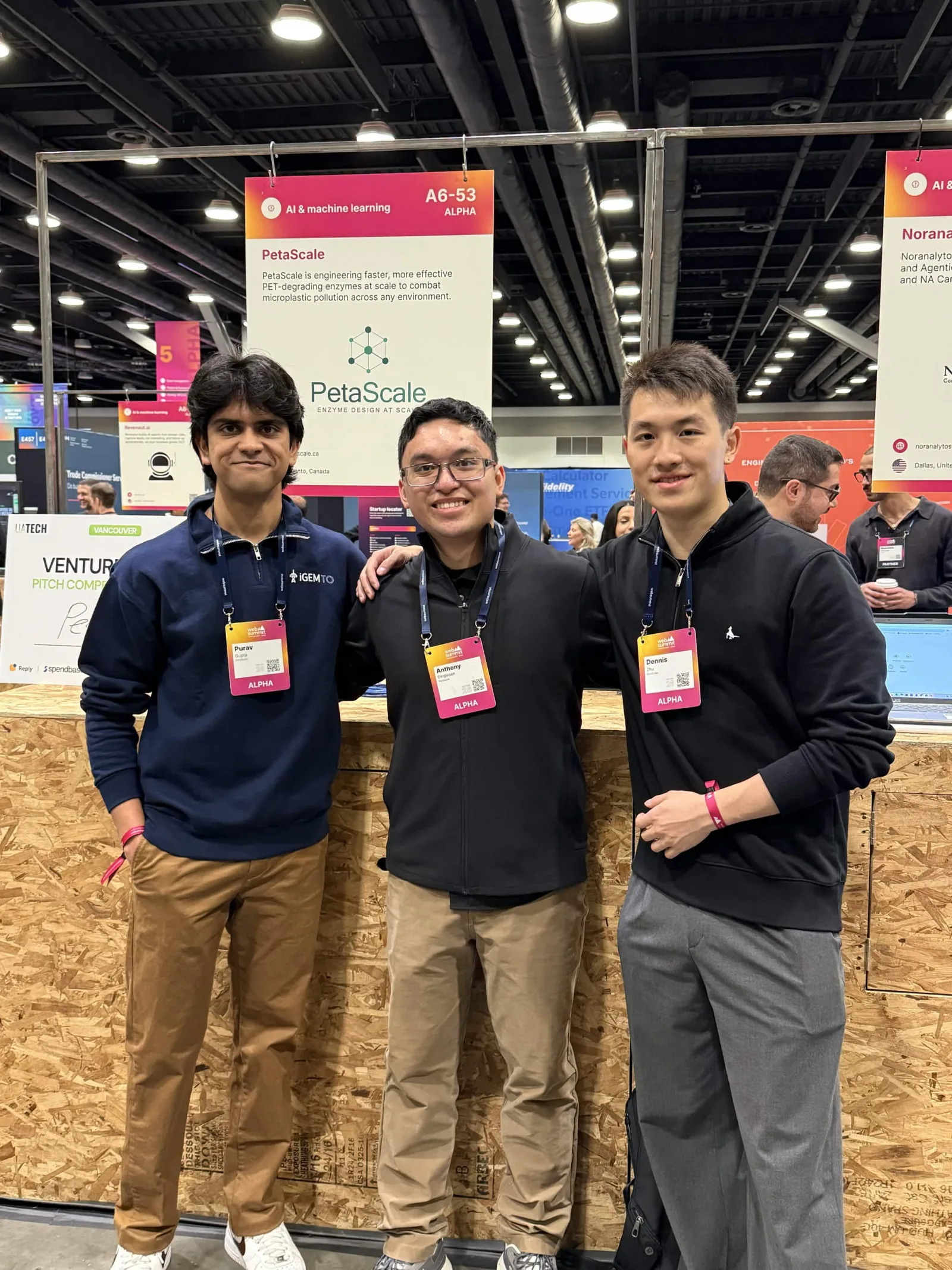
03The divisions
Who we are
Wet lab, dry lab, hardware, human practices, outreach, venture and web. You don't need a biology degree to make an impact here, and a lot of the team does not have one. Select a slice to learn more about that division.
Applications open every February
Whether you pipette, code, build or write, there is a place for you on the team. Join the mailing list and you will be the first to know when recruitment opens.